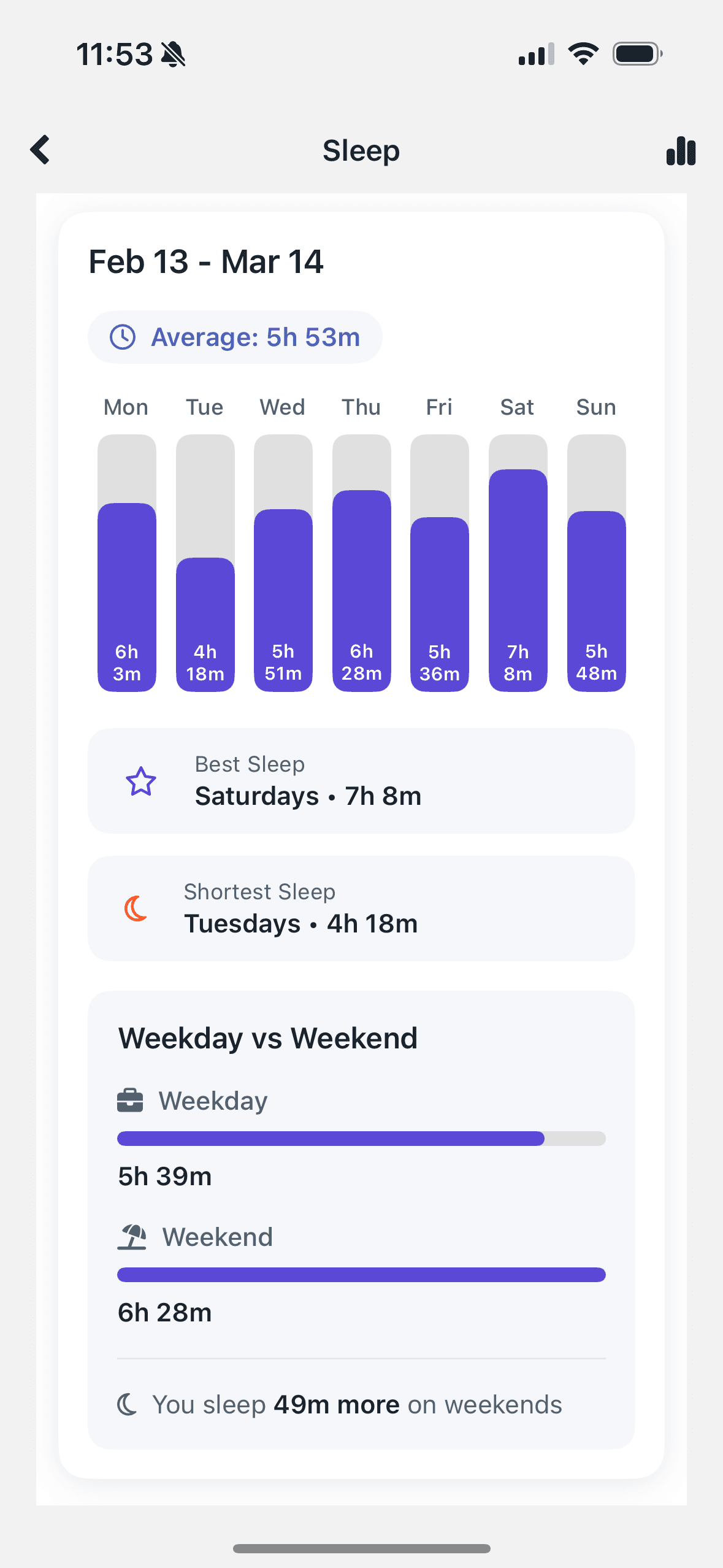
You've heard it a thousand times: get 7-9 hours of sleep. But here's what most people miss—when you sleep might matter just as much as how long you sleep.
Research is increasingly showing that sleep consistency—going to bed and waking up at roughly the same time every day—has profound effects on your health, independent of total sleep duration. In fact, some studies suggest it may be an even stronger predictor of health outcomes.
What Is Sleep Consistency?
Sleep consistency refers to how regular your sleep-wake schedule is from day to day. Someone with high sleep consistency goes to bed at roughly the same time and wakes up at roughly the same time every day, including weekends.
According to the National Sleep Foundation, maintaining a regular sleep schedule is one of the most important factors in getting quality rest.
The opposite—irregular sleep patterns—means your bedtime and wake time vary significantly. Maybe you sleep at 11 PM on weekdays but 2 AM on weekends. Or your wake time swings between 6 AM and 10 AM depending on your schedule.
Why Consistency Matters: The Science
Your Circadian Rhythm Needs Predictability
Your body runs on a roughly 24-hour internal clock called the circadian rhythm. This system controls not just when you feel sleepy, but also hormone release, body temperature, digestion, and dozens of other physiological processes.
When you keep irregular hours, you're essentially giving your circadian rhythm jet lag—repeatedly. Stanford researchers have found that this disruption affects mood, cognitive function, and overall health.
The Cleveland Clinic notes that your circadian rhythm influences virtually every system in your body. Disrupting it doesn't just make you tired—it throws off your entire physiology.
Research on Health Outcomes
A 2023 study published in Oxford Academic found something remarkable: sleep regularity was a stronger predictor of mortality risk than sleep duration. People with irregular sleep patterns had higher death rates, even if they were getting "enough" hours.
Research on over 90,000 participants, covered by The Washington Post, linked irregular sleep patterns to increased risk of cardiovascular problems, metabolic issues, and mental health challenges.
A study in the Canadian Science Publishing journal found that sleep consistency affected cardiovascular health independent of sleep duration.
The Health Benefits of Consistent Sleep
Mental Health
Irregular sleep wreaks havoc on your mood. Your brain relies on consistent sleep patterns to properly regulate neurotransmitters like dopamine and serotonin—the chemicals that control mood, motivation, and emotional stability.
A study of medical residents found that sleep regularity predicted mood and depression symptoms independent of how many total hours they slept. You can get 8 hours every night and still feel terrible if those hours are at random times.
Cardiovascular Health
Your heart and blood vessels follow circadian patterns. Blood pressure naturally dips at night and rises in the morning. Irregular sleep disrupts these patterns, putting additional stress on your cardiovascular system.
Research published in Sleep Health Journal has linked sleep irregularity to higher rates of heart disease, hypertension, and other cardiovascular problems.
Metabolic Function
Your metabolism is tightly linked to your circadian rhythm. Irregular sleep patterns are associated with:
- Impaired glucose regulation
- Increased insulin resistance
- Higher rates of obesity
- Greater risk of type 2 diabetes
Research from NCBI shows that circadian disruption affects how your body processes food and regulates blood sugar, even if your diet stays the same.
Cognitive Performance
If you're a student or knowledge worker, pay attention: sleep consistency significantly affects cognitive function.
A study published in npj Science of Learning found that sleep regularity accounted for approximately 25% of the variance in academic performance. Students with consistent sleep schedules performed dramatically better than those with irregular patterns, even when total sleep hours were similar.
Immune Function
Your immune system follows circadian patterns too. Consistent sleep helps maintain proper immune function, while irregular sleep can suppress immune responses and increase inflammation.
The American Academy of Sleep Medicine emphasizes that regular sleep timing is crucial for maintaining a healthy immune system.
Signs Your Sleep Is Inconsistent
How do you know if sleep inconsistency is a problem for you? Look for these signs:
- Variable bedtimes: Your bedtime varies by more than an hour from day to day
- Weekend shift: You sleep significantly later on weekends than weekdays (this is called "social jetlag")
- Trouble falling asleep: Despite being tired, you lie awake because your body doesn't know it's bedtime
- Inconsistent energy: Your daytime alertness is unpredictable, even with similar sleep amounts
- Sleep debt cycles: You regularly need to "catch up" on sleep after periods of deprivation
If you're experiencing several of these, improving your sleep consistency could make a significant difference—possibly more than just trying to sleep longer.
How to Build Consistent Sleep Habits
Set Fixed Sleep and Wake Times
Pick a bedtime and wake time that works for your schedule and stick to it—including weekends. Yes, weekends too. This is the single most important change you can make.
The American Academy of Sleep Medicine recommends keeping your schedule within 30-60 minutes of your target times, even on days off.
Create a Bedtime Routine
A consistent 30-60 minute wind-down routine signals to your body that sleep is coming. This could include:
- Dimming lights
- Reading (not on a bright screen)
- Light stretching
- Meditation or breathing exercises
- Personal hygiene routines
The routine itself matters less than doing it consistently at the same time each night.
Optimize Your Sleep Environment
Make your bedroom conducive to sleep:
- Dark: Use blackout curtains or a sleep mask
- Quiet: Use earplugs or white noise if needed
- Cool: Most people sleep best between 65-68°F (18-20°C)
- Comfortable: Invest in a good mattress and pillows
Manage Light Exposure
Light is the primary signal that sets your circadian rhythm:
- Morning: Get bright light exposure within 30-60 minutes of waking. Sunlight is best, but a bright light box works too.
- Evening: Dim lights and avoid screens 1-2 hours before bed. If you must use screens, enable night mode.
Keep Consistent Meal and Exercise Times
Your circadian rhythm is also influenced by when you eat and exercise. Try to keep these at roughly the same time each day:
- Eat meals at consistent times
- Exercise at the same time of day (morning exercise can help reinforce your wake time)
- Avoid large meals close to bedtime
Make Gradual Adjustments
If your current schedule is far from ideal, don't try to fix it overnight. Shift your bedtime and wake time by 15-30 minutes every few days until you reach your target.
Limit Weekend-Weekday Differences
Try to keep your weekend sleep schedule within one hour of your weekday schedule. Yes, it's tempting to sleep in on Saturday, but a 3-hour difference essentially gives you jet lag every Monday.
Use Sleep Tracking
It's hard to improve what you don't measure. Sleep tracking apps like Zolt can show you:
- Your actual sleep consistency over time
- Patterns you might not notice (like gradually drifting later)
- How consistency correlates with your sleep quality scores
When to Seek Professional Help
If you've tried improving your sleep consistency and still struggle, consider consulting a sleep medicine specialist. Some people have circadian rhythm disorders that require professional treatment, such as:
- Delayed sleep phase syndrome (naturally very late sleep timing)
- Advanced sleep phase syndrome (naturally very early sleep timing)
- Non-24-hour sleep-wake disorder
- Shift work sleep disorder
These conditions can be managed with proper treatment, including light therapy, melatonin timing, and behavioral interventions.
The Bottom Line
Sleep consistency might be the most underrated factor in sleep health. Research increasingly suggests that when you sleep matters as much as—and possibly more than—how long you sleep.
The prescription is simple but not easy: go to bed at the same time and wake up at the same time, every day, including weekends. Build a consistent routine around it. Give your circadian rhythm the predictability it craves.
Your mood, heart, metabolism, brain, and immune system will thank you.