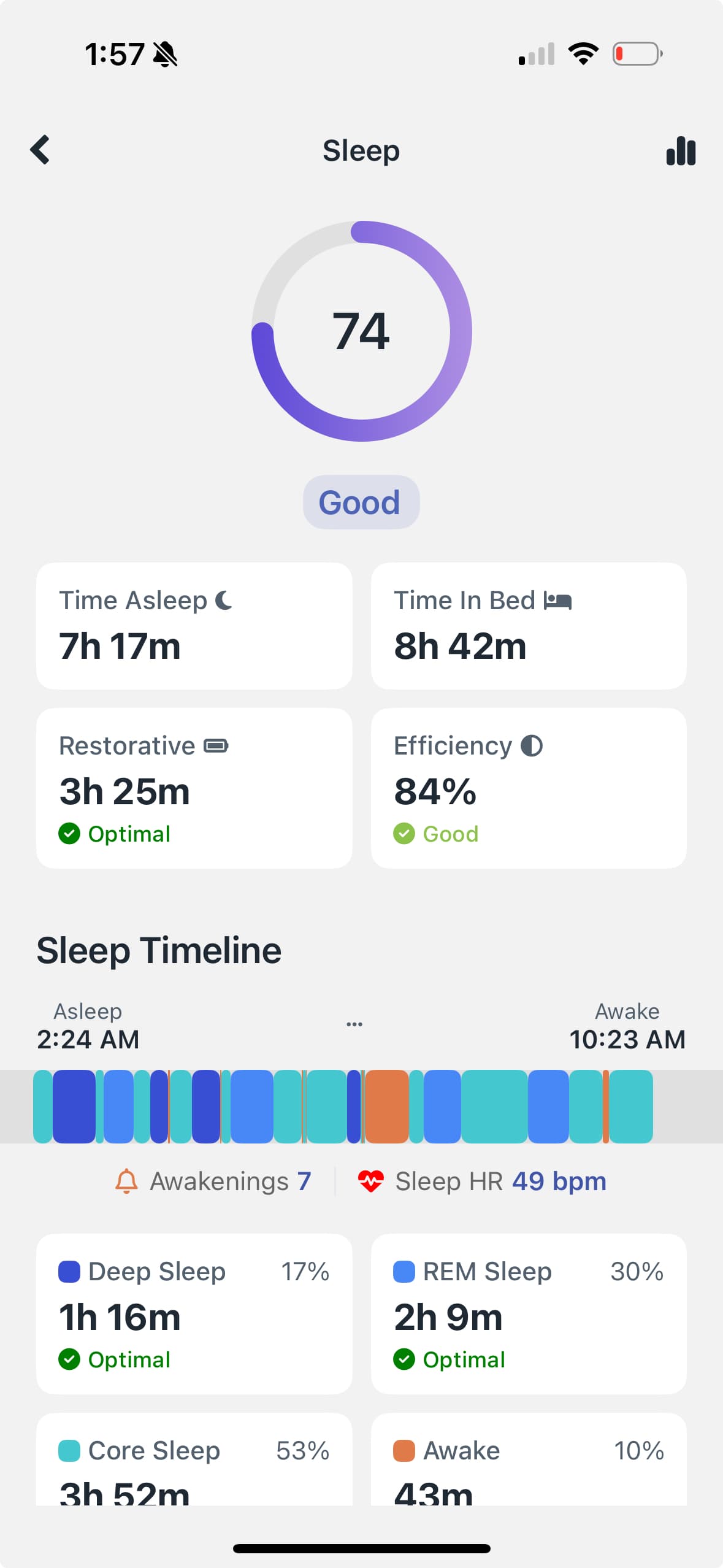
You spent 8 hours in bed last night. But how much of that time were you actually asleep?
That's what sleep efficiency measures—and it might be more important than total time in bed.
What Is Sleep Efficiency?
Sleep efficiency is the ratio between time spent actually sleeping and total time in bed, expressed as a percentage.
The formula:
Sleep Efficiency = (Time Asleep / Time in Bed) × 100
Example: If you're in bed for 8 hours but only sleep for 6 hours and 40 minutes, your sleep efficiency is 83%.
According to the National Sleep Foundation, sleep efficiency is one of the key indicators of sleep quality—sometimes more meaningful than total sleep duration.
Why Sleep Efficiency Matters
High sleep efficiency means you're using your time in bed well. You fall asleep quickly, stay asleep through the night, and wake up feeling rested.
Low sleep efficiency means you're spending significant time in bed not sleeping—lying awake trying to fall asleep, waking up repeatedly, or tossing and turning.
Research from RISE Science shows that poor sleep efficiency is associated with:
- Increased daytime fatigue
- Reduced cognitive performance
- Higher stress and anxiety levels
- Weaker immune function
- Greater risk of sleep disorders
Interestingly, trying to "force" more sleep by spending extra time in bed often backfires. If you're in bed for 9 hours but only sleeping 6, you're training your brain to associate your bed with wakefulness—making the problem worse.
What's Considered Good Sleep Efficiency?
Sleep experts generally use these benchmarks:
| Rating | Sleep Efficiency | |--------|------------------| | Excellent | 90% and above | | Good | 85-89% | | Fair | 75-84% | | Poor | Below 75% |
Most healthy adults fall in the 85-95% range. If you're consistently below 75%, it's worth investigating why.
Note: Very high efficiency (98%+) can sometimes indicate sleep deprivation—you're so tired that you crash immediately and don't wake at all. Healthy sleep typically includes brief awakenings you don't remember.
Factors That Affect Sleep Efficiency
Environmental Factors
Your sleep environment has a huge impact on efficiency:
- Noise: Even sounds that don't fully wake you can fragment sleep
- Light: Any light exposure can suppress melatonin and disrupt sleep
- Temperature: Too hot or too cold reduces sleep quality
- Comfort: An uncomfortable mattress or pillow causes more movement and awakenings
Lifestyle Choices
Daily habits directly affect how well you sleep:
- Caffeine: Research shows caffeine can reduce sleep efficiency by 7% even when consumed 6 hours before bed
- Alcohol: While it may help you fall asleep, alcohol fragments sleep and reduces efficiency
- Exercise: Regular exercise improves efficiency, but intense workouts close to bedtime can hurt it
- Screen time: Blue light and mental stimulation before bed delay sleep onset
Age and Gender
Sleep efficiency naturally changes over time:
- Efficiency declines about 1% per decade as we age
- Older adults typically have more fragmented sleep and lower efficiency
- Women may experience efficiency changes related to menstrual cycles, pregnancy, and menopause
Health Conditions
Various conditions can significantly impact sleep efficiency:
- Sleep apnea: Causes repeated awakenings (often unremembered)
- Insomnia: By definition involves poor sleep efficiency
- Restless leg syndrome: Disrupts sleep onset and maintenance
- Chronic pain: Makes it harder to stay asleep
- Anxiety and depression: Often cause racing thoughts and early awakening
Signs of Poor Sleep Efficiency
How do you know if low sleep efficiency is a problem for you?
- Taking 30+ minutes to fall asleep (sleep onset insomnia)
- Waking up multiple times during the night
- Lying awake for extended periods if you do wake
- Feeling unrefreshed despite adequate time in bed
- Daytime fatigue and sleepiness that doesn't match your "sleep" hours
If you're in bed for 8 hours but feel like you only slept 5, your subjective experience probably reflects reality—your efficiency is low.
How to Improve Your Sleep Efficiency
Optimize Your Sleep Environment
Create conditions that promote uninterrupted sleep:
- Darkness: Use blackout curtains or a sleep mask
- Quiet: Use earplugs or white noise to mask disruptions
- Cool temperature: Most people sleep best at 65-68°F (18-20°C)
- Comfortable bedding: Invest in a quality mattress and pillows
Establish a Consistent Sleep Schedule
According to the American Academy of Sleep Medicine:
- Go to bed and wake up at the same time daily
- Keep weekend schedules within 1 hour of weekday times
- Consistency reinforces your circadian rhythm, making sleep onset faster
Practice Good Sleep Hygiene
Build habits that support efficient sleep:
- Exercise regularly but finish intense workouts 3+ hours before bed
- Manage stress through meditation, journaling, or relaxation techniques
- Limit caffeine after early afternoon
- Avoid alcohol close to bedtime—it may help you fall asleep but reduces efficiency
Implement the 20-Minute Rule
This is a key technique from cognitive behavioral therapy for insomnia:
If you can't fall asleep (or fall back asleep) within about 20 minutes, get out of bed. Do something quiet and relaxing in dim light—reading, gentle stretching, deep breathing. Return to bed only when you feel sleepy.
This prevents your brain from associating your bed with wakefulness and frustration.
Limit Technology Before Bed
Screens affect sleep efficiency in two ways:
- Blue light suppresses melatonin production
- Mental stimulation keeps your brain alert
The Sleep Foundation recommends avoiding screens for at least 30-60 minutes before bed. If you must use devices, enable night mode and keep content calm.
Consider Sleep Restriction (Counterintuitive but Effective)
If your efficiency is very low, temporarily restricting time in bed can help. For example, if you're spending 9 hours in bed but only sleeping 6, try limiting yourself to 6.5 hours in bed.
This builds "sleep pressure" and helps consolidate your sleep. As efficiency improves, you gradually extend time in bed. This technique is best done with guidance from a sleep specialist.
Tracking Your Sleep Efficiency
Wearables like Apple Watch can estimate your sleep efficiency by tracking:
- When you got in bed
- When you fell asleep
- How long you were awake during the night
- When you woke up
In Zolt, we calculate your sleep efficiency and show you trends over time. A single night's data isn't that meaningful—look at your weekly and monthly averages to see if you're improving.
Tracking also helps you identify patterns. Maybe your efficiency drops on nights you drink alcohol, or improves when you exercise that day. Data reveals these connections.
When to Seek Professional Help
Consider consulting a sleep specialist if:
- Your sleep efficiency is consistently below 75%
- You suspect a sleep disorder (snoring, gasping, leg movements)
- Poor sleep is significantly impacting your daily life
- You've tried self-help strategies without improvement
- You experience excessive daytime sleepiness despite adequate bed time
Sleep disorders like sleep apnea are common and treatable—but often go undiagnosed because people don't realize their sleep is being disrupted.
The Bottom Line
Sleep efficiency tells you how well you're actually sleeping, not just how long you're in bed. High efficiency (85%+) means you're falling asleep quickly, staying asleep, and getting quality rest.
If your efficiency is low, focus on the fundamentals: consistent schedule, optimized environment, good sleep hygiene, and the 20-minute rule. Track your progress over time and don't hesitate to seek help if problems persist.
Sometimes sleeping better isn't about spending more time in bed—it's about making the time you spend more effective.