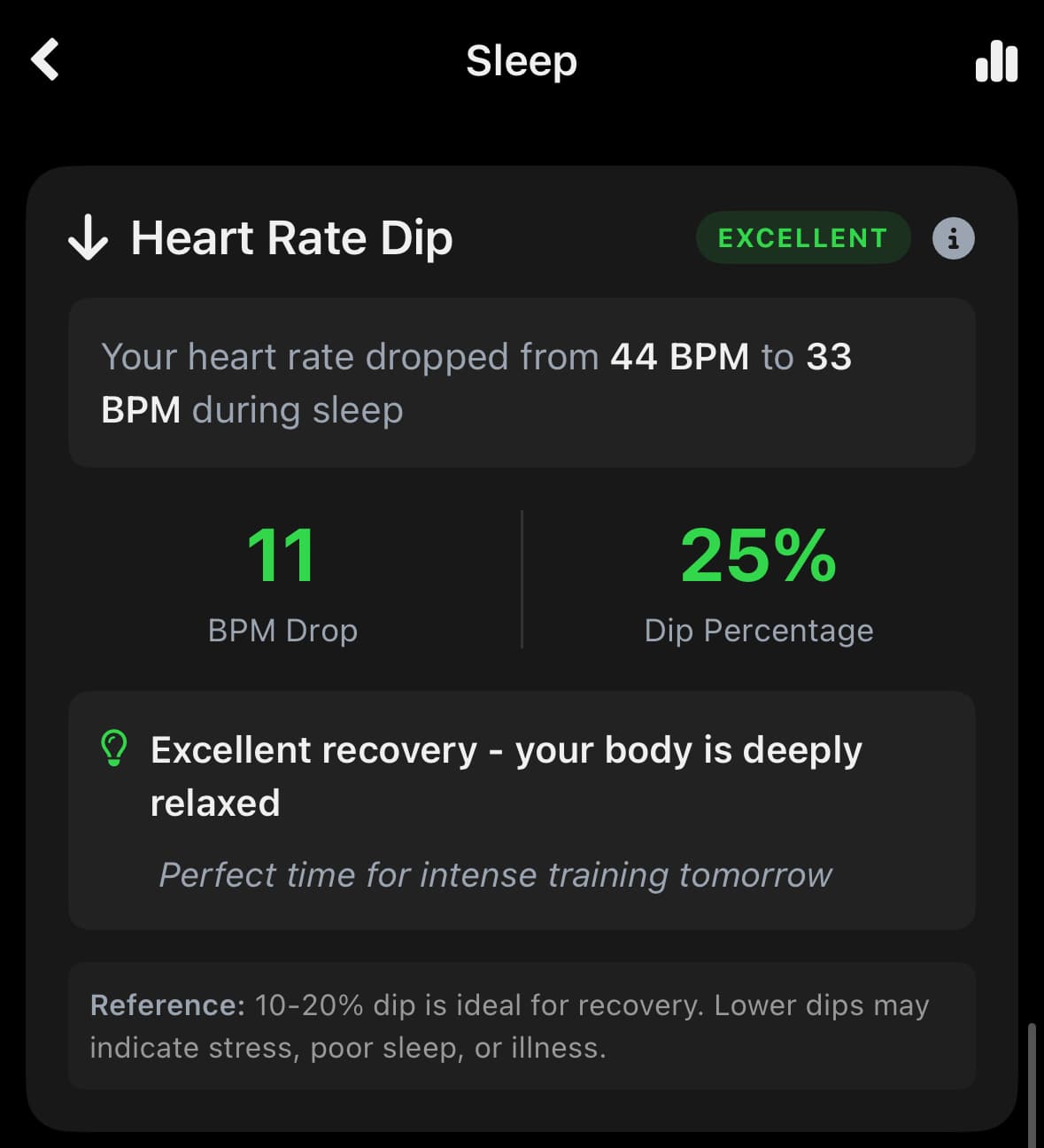
Your heart rate drops while you sleep. It's one of those things most people never think about, but it actually tells you a lot about how well you're recovering and how healthy your cardiovascular system is.
What is Heart Rate Dip During Sleep?
When you sleep, your heart rate drops compared to when you're awake. Usually, this is somewhere between 10-20 beats per minute lower than your daytime resting heart rate.
This happens because your body shifts from "stress mode" (sympathetic nervous system) to "rest mode" (parasympathetic nervous system). When you're in recovery mode, your heart doesn't need to work as hard, so it slows down.
The Science Behind Sleep Heart Rate Changes
Your heart rate doesn't just drop and stay flat all night. It varies based on what sleep stage you're in:
Deep Sleep: This is when your heart rate hits its lowest point. Your body is doing serious recovery work here.
REM Sleep: Your heart rate actually goes back up during REM because your brain is super active (this is when you dream). It's normal and nothing to worry about.
Your Internal Clock: Your circadian rhythm also controls how much your heart rate dips. If your sleep schedule is all over the place, it can mess with this natural dip.
What's a Normal Heart Rate Dip?
A healthy dip is usually 10-20% below your daytime resting heart rate. Here's what that looks like for different people:
- Most adults: 10-20 bpm drop
- Athletes: Often see bigger dips, like 20-30 bpm, because their cardiovascular systems are more efficient
- Older adults: Usually have smaller dips, around 5-15 bpm
If your dip is consistently less than 10%, that might be worth checking out with a doctor. It could point to cardiovascular issues or chronic stress.
What Affects Your Heart Rate Dip?
A bunch of things can make your heart rate dip smaller or larger:
Sleep Quality
If you're tossing and turning all night or have sleep apnea, your heart rate won't drop as much. Your body needs solid, uninterrupted sleep for that dip to happen.
Fitness Level
The more fit you are, the bigger your dip tends to be. Your heart is just more efficient at recovering when you're in good shape.
Stress and Recovery
Stressed out or overtrained? Your heart rate won't dip as much. Your body is still in "alert mode" even when you're sleeping.
Age and Health
As you get older, your dip naturally gets smaller. Health issues like diabetes, high blood pressure, or heart disease can also reduce it.
Lifestyle
- Alcohol: Messes with your sleep and your heart rate dip
- Caffeine: Drinking coffee late in the day will keep your heart rate elevated at night
- Late workouts: Hit the gym too close to bedtime and your heart will still be racing while you sleep
- Your bedroom: Too hot, too bright, or too noisy? Your heart rate will stay higher
Why This Actually Matters
Here's why you should care about your heart rate dip:
It Shows How Healthy Your Heart Is
People with consistently low heart rate dips have a higher risk of heart problems. If your dip is healthy and consistent, it's a good sign your cardiovascular system is working well.
It Tells You If You're Really Sleeping Well
A big dip usually means you're getting deep, quality sleep. A small dip might mean you're not sleeping as well as you think, even if you're in bed for 8 hours.
It's a Recovery Tracker
If you train hard, this is gold. A normal or big dip means you've recovered. A smaller dip means you might be overdoing it and need more rest.
It Reveals Your Stress Levels
Chronically stressed? Your heart rate won't dip much at night. It's like your body can't fully relax, even when you're asleep.
How to Track It
Most wearables these days can track your heart rate while you sleep:
Apple Watch, Fitbit, Oura Ring, Whoop - All of these continuously monitor your heart rate through the night and can show you trends over time.
The thing is, most wearables just give you raw numbers. You'll see your overnight heart rate, but you have to figure out what it means yourself. Some apps (like Zolt) will actually analyze the data for you and tell you if your dip is good, bad, or if there's a pattern you should pay attention to.
How to Improve Your Heart Rate Dip
If you want a better dip, here's what actually works:
Fix Your Sleep Habits
- Go to bed and wake up at the same time every day (yes, even weekends)
- Make your room cool, dark, and quiet
- Put your phone away an hour before bed
- Cut out caffeine after 2pm and go easy on the alcohol
Manage Your Stress
- Try meditation or just take 10 minutes to breathe deeply before bed
- Exercise regularly, but not right before bed
- Yoga and stretching help a lot of people wind down
General Lifestyle
- Keep a healthy weight
- Eat decent food (you know what I mean)
- Drink enough water during the day
- Don't eat a huge meal right before bed
If You're Training Hard
- Eat and hydrate properly after workouts
- Take actual rest days (walking is fine, but not everything needs to be intense)
- Get 7-9 hours of sleep
- Pay attention to how you're recovering - if your heart rate dip is getting smaller, you probably need more rest
Bottom Line
Your heart rate dip is one of those metrics that actually tells you something useful. A dip of 10-20% means your body is recovering properly. If yours is consistently lower than that, it might be worth looking into.
Don't obsess over it every single night - look at trends over time. One bad night doesn't mean much, but if you're seeing a pattern of small dips, that's your body telling you something.
And obviously, if something seems really off, talk to a doctor. This is helpful data, but it's not a replacement for actual medical advice.