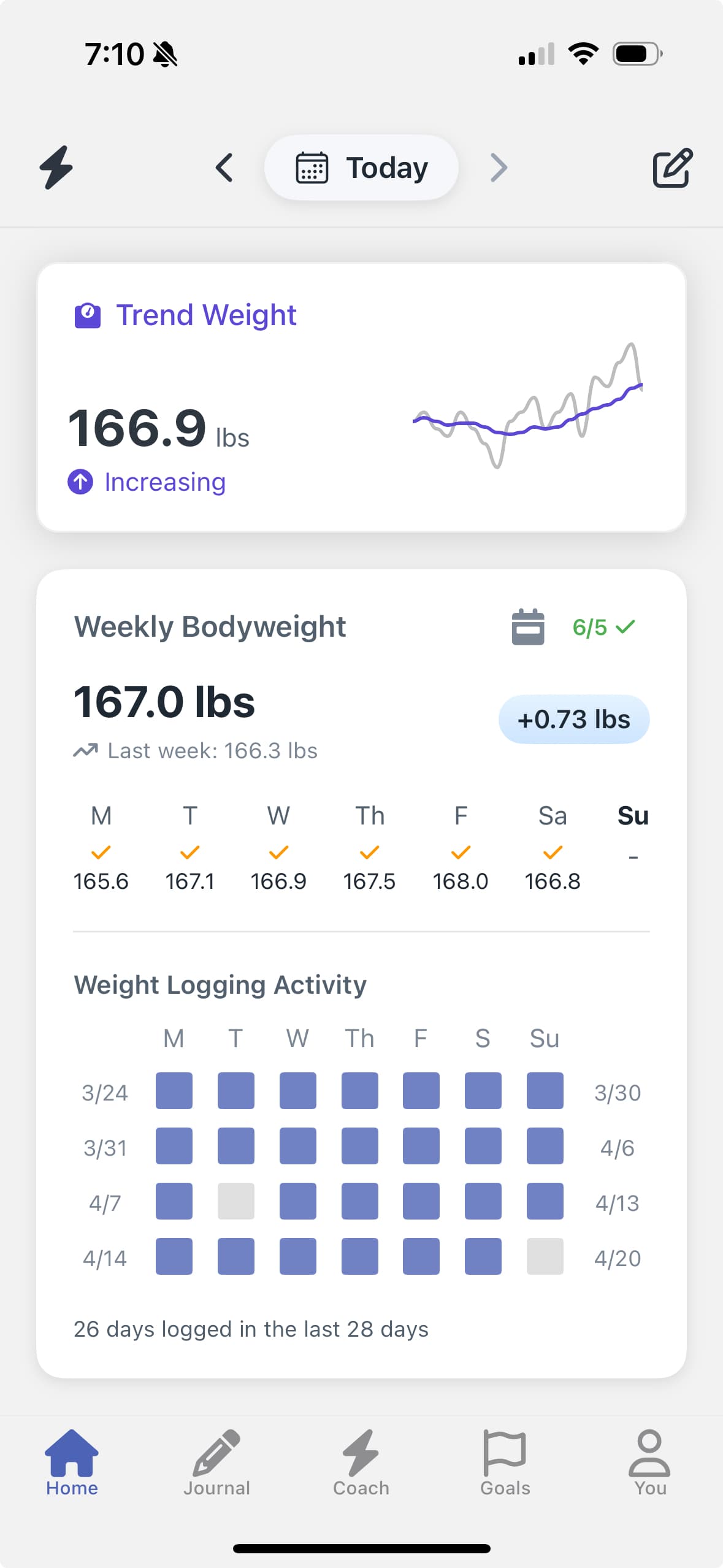
You step on the scale Monday morning: 165 pounds. Tuesday: 168 pounds. Wednesday: 164 pounds. What's going on? Did you really gain 3 pounds overnight and then lose 4?
No. You didn't. This is completely normal, and understanding why it happens will save you a lot of unnecessary stress.
The Reality of Daily Weight Fluctuations
Research shows that the average adult's body weight naturally fluctuates between 1-2 kg (2.2-4.4 pounds) over just a few days. Some studies have documented swings of 5-6 pounds in a single day.
This isn't fat gain or loss. It's almost entirely water, food in transit, and other temporary factors. Real fat loss or gain happens slowly—about 1-2 pounds per week at most under normal circumstances.
The problem is that your scale can't tell the difference between fat, muscle, water, food in your stomach, or waste in your intestines. It just measures total mass. And that total mass changes constantly.
What Causes Weight to Fluctuate?
1. Water Retention
Water makes up roughly 60% of your body weight. Small shifts in your hydration status can cause significant scale changes.
Sodium intake is the biggest culprit. Eat a salty meal, and your body holds onto extra water to maintain proper electrolyte balance. That Chinese takeout or pizza night? You might see 2-3 pounds of water weight the next morning. It's not fat—it'll be gone in a day or two.
Carbohydrate intake also affects water retention. Every gram of carbohydrate you store as glycogen holds 3-4 grams of water with it. If you've been low-carb and then eat a carb-heavy meal, you might see a dramatic spike. Again, it's just water and glycogen, not fat.
Hydration status matters too. Paradoxically, drinking more water can sometimes reduce water retention because your body doesn't feel the need to hold onto it.
2. Food and Digestive Contents
This one's obvious but often forgotten: food has weight. If you eat 2 pounds of food (which isn't hard over a full day), you'll temporarily weigh 2 pounds more until it's digested and eliminated.
The average person has 106-170 grams of stool weight at any given time, and food takes 1-3 days to fully transit through your digestive system. Your morning weight depends partly on whether you've had a bowel movement.
3. Exercise
Exercise causes water loss through sweat—roughly 25-45 ounces per hour of moderate activity. Weigh yourself before and after a workout, and you might be 1-2 pounds lighter (though you should rehydrate).
But here's the twist: strength training causes your muscles to retain water during recovery. Those micro-tears in your muscle fibers trigger an inflammatory response that involves holding onto fluid. You might actually weigh more the day after a hard workout, even though you're making progress.
4. Hormonal Fluctuations
For women, the menstrual cycle causes predictable weight fluctuations. Water retention typically increases in the days leading up to menstruation and resolves naturally afterward. This can mean 2-5 pounds of temporary weight gain that has nothing to do with fat.
Men experience hormonal fluctuations too, though usually less dramatic. Cortisol (stress hormone) can cause water retention in both sexes.
5. Alcohol Consumption
Alcohol affects weight in multiple ways:
- It slows digestion, keeping food in your system longer
- It triggers water retention
- It affects hydration balance (despite being a diuretic initially)
- It often comes with salty snacks and poor food choices
A night of drinking can easily cause 2-3 pounds of temporary weight gain.
Why Trend Weight Matters More Than Daily Weight
If daily weight is so unreliable, what should you track instead?
Trend weight—a rolling average of your daily weigh-ins over 7 days or more.
Here's how it works: Instead of obsessing over today's number, you look at the average of the past week. This smooths out all the daily noise and reveals your actual trajectory.
For example:
- Monday: 165
- Tuesday: 168
- Wednesday: 164
- Thursday: 166
- Friday: 167
- Saturday: 163
- Sunday: 165
Daily view: Chaos. You're up 3 pounds one day, down 4 the next.
Trend view: Your 7-day average is 165.4 pounds. If last week's average was 166.1, you're actually down 0.7 pounds. Progress!
Trend weight helps you:
- See real progress even when daily numbers jump around
- Stay motivated by filtering out discouraging spikes
- Make better decisions about whether to adjust your calories
- Reduce anxiety about normal fluctuations
How to Track Your Weight Effectively
Weigh at the Same Time Daily
Morning, after using the bathroom, before eating or drinking—this is the most consistent time. Your weight will still fluctuate, but at least you're comparing apples to apples.
Weigh Daily, But Look Weekly
Daily data gives you more points to average. But don't react to any single day. Look at your weekly trend instead.
Don't Panic Over Spikes
Ate sushi last night? Scale up 3 pounds? That's the sodium and rice. Give it 2-3 days before drawing conclusions.
Consider What Changed
If your weight spikes, think about:
- Did you eat more sodium than usual?
- Did you eat more carbs than usual?
- Did you have alcohol?
- Are you sore from a workout?
- Where are you in your menstrual cycle?
Usually there's an obvious explanation.
Track Long-Term Trends
One week isn't enough data. Look at 2-4 week trends to understand what's really happening. Weight loss isn't linear—you might stay flat for two weeks and then drop 3 pounds suddenly.
How Zolt Handles Weight Tracking
In Zolt, we automatically calculate your trend weight from your daily weigh-ins. You see both numbers:
- Your actual weight today
- Your smoothed trend weight
This way you have the data, but you also have context. When your daily weight spikes but your trend is still heading down, you know you're on track.
We also sync automatically with Apple Health and Google Fit, so if you have a smart scale, your weight data flows in without manual entry.
Combined with adaptive TDEE tracking, this gives you a complete picture: you know how many calories you're actually burning, and you can see your true weight trajectory without the noise.
The Bottom Line
Your weight will fluctuate 2-5 pounds daily. This is normal. It's not fat—it's water, food, and biology doing its thing.
Stop judging your progress by single weigh-ins. Track your trend weight over weeks, not days. Make decisions based on 2-4 week patterns, not morning-to-morning changes.
And if you're doing everything right but the scale seems stuck? Check your trend. You might be making more progress than you think.