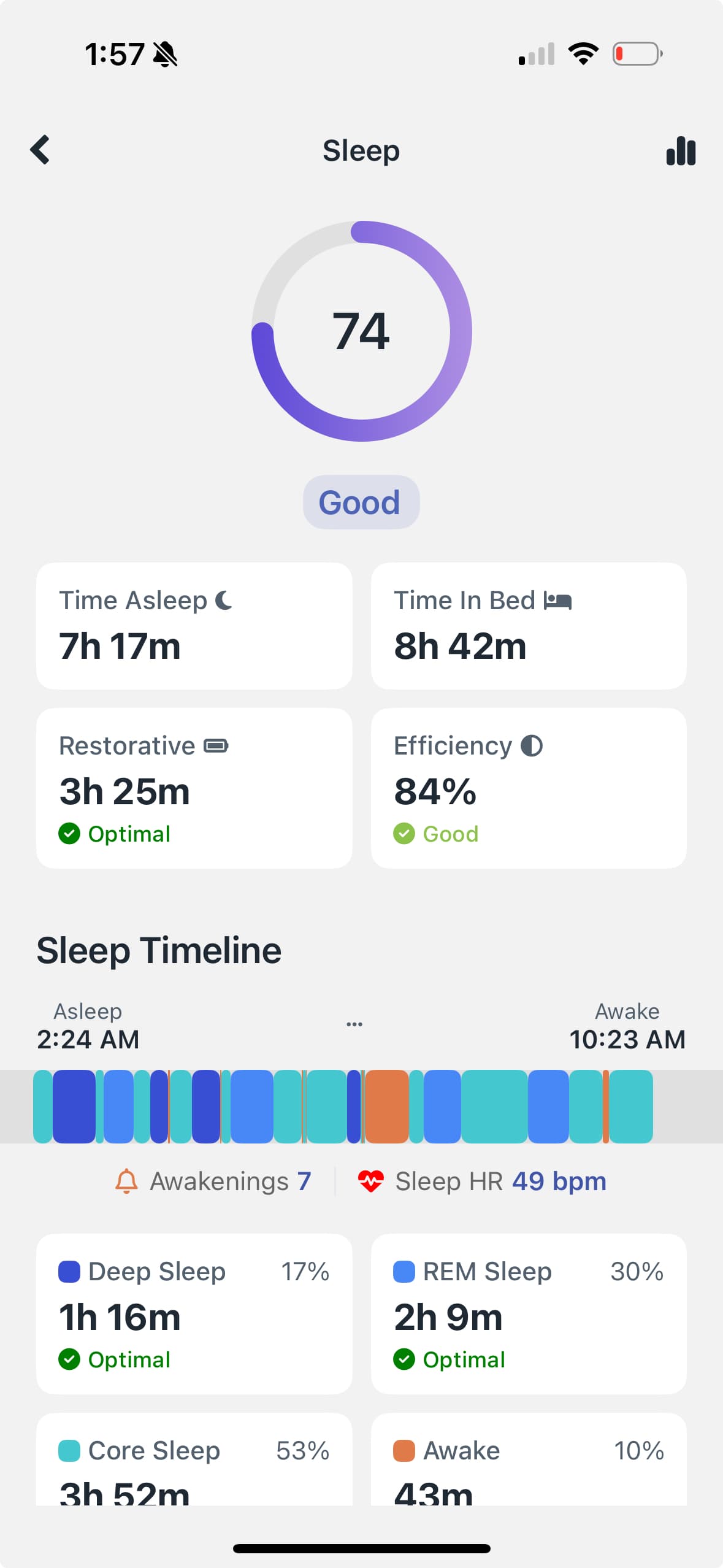
Zolt's sleep score represents the quality of your sleep from the previous night. See what features Zolt has regarding sleep.
How the Score Works
According to Zolt's scoring philosophy:
| Rating | Score Range | |--------|-------------| | Excellent | 75-100 | | Good | 50-75 | | Fair | 25-50 | | Poor / Needs Work | 0-25 |
Excellent is very achievable and represents the daily target. Each "excellent" day receives a checkmark on the weekly view.
What Goes Into Your Sleep Score
The score accounts for five components:
-
Time Asleep - Total sleep duration measured in hours. Research analyzing over 4 million participants from 30 countries indicates 7-8 hours is optimal for most adults.
-
Sleep Efficiency - Percentage of time actually sleeping while in bed. Normal sleep efficiency is 85% or higher.
-
Deep Sleep - Deep sleep percentage of total sleep time. Deep sleep supports physical recovery and memory consolidation.
-
REM Sleep - REM sleep percentage of total sleep time. REM sleep is essential for cognitive functions, emotional processing, and learning.
-
Time Awake - Duration awake during sleep period. Brief awakenings are normal; excessive wakefulness disrupts sleep cycles.
Why Each Component Matters
Time Asleep
Carries the highest weight in scoring. The American Academy of Sleep Medicine and Sleep Research Society recommend 7+ hours nightly for optimal health. Less than 6 hours significantly reduces scores; 8+ hours maximizes this component.
Sleep Efficiency
Reflects sleep maintenance quality. Higher efficiency (85%+) indicates minimal disruptions. Optimal range is 90-95% for most adults.
Deep Sleep
Should comprise 13-23% of total sleep time. Adults typically spend up to 20% in deep sleep, when the body strengthens muscle, bone, tissue, and immune function.
REM Sleep
Should constitute 20%+ of total sleep. Critical for cognitive function, emotional well-being, and creativity.
Time Awake
Brief awakenings are normal; exceeding 2% of sleep period awake may indicate disturbances affecting quality.
Tips for Improving Your Score
For Time Asleep
Aim consistently for 7-8 hours. Establish a regular sleep schedule, including weekends.
For Sleep Efficiency
Limit pre-bed screen time, maintain a cool dark bedroom, and consider relaxation techniques if experiencing sleep onset difficulties.
For Deep Sleep
Regular exercise (avoiding right before bed), limiting alcohol, and maintaining consistent sleep schedules increase deep sleep.
For REM Sleep
Reduce stress, establish consistent sleep schedules, and avoid REM-suppressing substances like alcohol and certain medications.
For Time Awake
Address sleep disruptors including noise, light, uncomfortable temperatures, or sleep disorders causing nighttime awakenings.
The Bottom Line
Your sleep score is personalized for tracking improvements over time. Research analyzing 11 million nights of sleep data found only 15% of participants consistently slept 7-9 hours for at least 5 nights weekly. One poor sleep night is normal; consistent patterns warrant attention.